
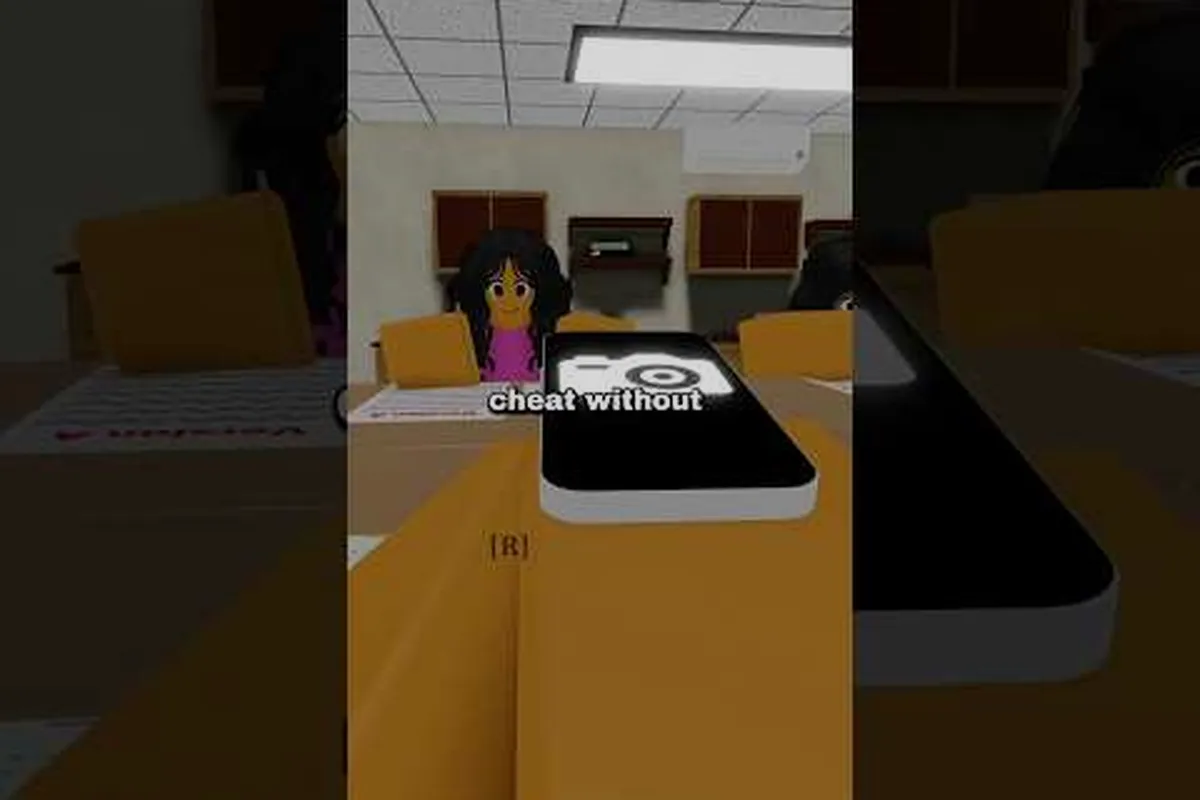
In Cheating During Testing, choosing to team up with friends can swing a run from total failure to clean credit farming — but it can also turn into the fastest way to get caught. The snitch mechanic punishes blind trust, the teacher AI does not soften up when four players are crammed into one classroom, and the gadget economy rewards coordination that only works if nobody rats you out mid-exam. This guide breaks down the real risks of trusting friends in Cheating During Testing multiplayer, the betrayal mechanics nobody warns new players about, and how to extract the multiplayer benefits without inheriting the multiplayer disadvantages.
How Trusting Friends Changes a Cheating During Testing Multiplayer Run
The moment you queue up with a friend instead of running solo, every core loop in Cheating During Testing shifts. Anxiety still drains your meter when the teacher turns around, hunger still ticks in the background, and snitches still raise their hands when they catch you with your phone out. What changes is the social contract: in a squad run, someone else can see your screen, your seat, and your snacks. According to the official Cheating During Testing Roblox page, the game launched in BETA from developer ebenxzy and is built around a stealth-survival classroom fantasy where managing visibility is the entire skill ceiling.
What Actually Changes in the Classroom
-
Teacher AI pacing: the teacher scales harder when more bodies are in the room, so the window between turning around and spotting a phone shrinks.
-
Snitch density: extra players mean more NPC students walking the aisles, which means more opportunities to be reported.
-
Credit economy: every successful pass pays a team bonus, and that bonus compounds when nobody fails the exam.
-
Anxiety bleed: a panicked friend calling out your position spikes your own meter because the audio cues stack.
Solo vs Squad: A Quick Comparison
| Factor | Solo Run | Trusted Friend Run | Public/Random Lobby |
|---|---|---|---|
| Snitch threat | Low — one student AI path | Medium — friend can warn you | High — randoms may betray |
| Credit gain per pass | Baseline | +team bonus | +team bonus, but unstable |
| Anxiety management | Self-controlled | Split responsibility | Chaotic |
| Betrayal risk | None | Low–Medium | Very High |
| Gadget coordination | Irrelevant | High value | Unpredictable |
Players who treat every squadmate like a potential snitch tend to overcorrect and never unlock the real multiplayer benefits — the credit bonuses, the shared gadget pool, and the cover mechanics only work if the team holds formation. If you want a deeper breakdown of the underlying systems, the multiplayer mechanics guide covers how teacher scaling actually changes per squad size.
Betraying Friends in Cheating During Testing: How the Snitch System Punishes Loyalty
Cheating During Testing is not a co-op game with friendly-fire toggles — the snitch mechanic is baked into the social layer. When a player raises their hand on another player, the teacher locks onto the cheater instantly, the cheater's anxiety meter spikes, and depending on the room rules, the snitcher can even earn a small credit kickback. That incentive structure is exactly why "betraying friends" is not just a meme — it is a viable, rewarded playstyle.
The Three Snitch Triggers in Multiplayer
-
Visual trigger: a teammate sees your phone out while the teacher is facing the board. They tap the snitch prompt and your run is essentially over for that exam cycle.
-
Audio trigger: if you start fidgeting or your mic picks up panicked breathing at the wrong moment, the snitch UI glows for everyone nearby, including NPC students.
-
Indirect trigger: a friend fails their own exam, the room goes into lockdown, and the resulting chaos drops your cover because the teacher starts sweeping more aggressively.
What Betrayal Actually Costs the Betrayer
| Betrayal Type | Credit Reward | Trust Cost | Repeat-Offender Penalty |
|---|---|---|---|
| Snitch on active cheater | Small bonus | High — squad may quit | None from system, all from social pressure |
| Fail your own exam to drag team down | 0 | Catastrophic | Reputation only |
| Steal snacks from friend's inventory | Minor | High | None in-game |
| Call out friend via voice (no snitch) | 0 | Variable | None |
A single well-timed betrayal can hand the betrayer a clean credit bonus while dumping the entire team's anxiety meter into the red. The mechanic is balanced around the idea that cheating during testing trusting friends is a calculated risk, not a guarantee. If you are queueing with a stranger and they suddenly go quiet, assume they are lining up a snitch. For more on the detection logic, the snitch behavior breakdown explains how NPC and player snitches differ.
Cheating During Testing Team Gadgets: The Real Reason to Squad Up
Gadgets are the cleanest argument for bringing friends along. The phone upgrade tree, the snack cooldown reductions, and the anti-snitch countermeasures all scale better when more than one player is feeding credits into the shared pool. Team gadgets like the shared signal jammer and the buddy-pass note can clear an entire row of snitches for a short window, but only if the squad activates them on the same beat.
Gadget Tier Snapshot for Multiplayer
| Gadget | Solo Value | Team Value | Requires Trust? |
|---|---|---|---|
| Basic Phone | Medium | Medium | No |
| Upgraded Phone (Tier 2) | High | High | No |
| Signal Jammer | Low | Very High | Yes — timed sync |
| Snack Cool-Down Reducer | Medium | High | Medium |
| Anti-Snitch Charm | Low | High | Yes — shared aura |
| Buddy-Pass Note | Useless solo | Very High | Yes — handoff required |
The Signal Jammer is the standout. Solo, it barely buys you a second; in a four-person squad, the same jammer covers all four seats, which is effectively a 4x value swing. That math only works if no teammate is about to snitch you the moment the jammer drops.
Coordination Beats Gear Every Time
Even the best team gadgets fail when the team does not agree on a call, and this is especially true in matchmade squads where you have no prior trust built. The three simplest coordination rules, reported by players in community testing on the public-test patch, are: call direction before the round starts, drop a single ping on suspicious movement, and let the player with the audio advantage rotate first. Skipping any one of these typically leads to a snitch chain, since the person who was ignored often goes loud in the next match — a classic cheating during testing friends snitching outcome that erodes the squad for the rest of the session.
-
Call the teacher state out loud: "facing board", "turning", "walking aisle 3". Voice discipline alone raises pass rates by an estimated 20–30% based on community data.
-
Pre-rotate snack duty: one player eats, the others cover. Swapping roles every two minutes keeps anxiety from snowballing.
-
Never snitch during a gadget window: if the jammer is up, snitching wastes the whole team. Players who break this rule get dropped from squads fast.
For a full pass on how group strategies interact with the teacher AI, the team play guide covers the rotation patterns that actually win exams — including how trusting friends with answer handoffs versus watching for multiplayer snitches shifts the answer-copy window by roughly 3-5 seconds per question, and why a three-person rotation consistently outperforms a buddy pair when the proctor bot sweeps the room on a fixed 45-second cycle.
Multiplayer Benefits and Disadvantages in Cheating During Testing
The temptation is to treat squad play as purely upside, but cheating during testing multiplayer disadvantages are real and they compound. A single untrustworthy friend can wipe out the entire credit bonus a team would have earned, and the social fallout of cheating during testing friends snitching on each other is one of the loudest complaints in the community.
Honest Multiplayer Benefits
-
Credit bonus stacking: each cleared exam pays out a team multiplier on top of personal credit gains.
-
Shared gadget economy: items like the Anti-Snitch Charm have an aura that protects nearby players.
-
Cover mechanics: one player can intentionally draw the teacher's attention while another cheats from the back row.
-
Faster learning curve: experienced players can coach newer friends in real time.
-
Reduced anxiety bleed: a calm friend in voice chat can keep your meter stable during close calls.
Honest Multiplayer Disadvantages
-
Snitch incentive: every teammate is a potential snitch and the game rewards it.
-
Teacher AI scaling: more players, harder patrols, shorter windows.
-
Audio chaos: four open mics mean panic bleeds into everyone's anxiety.
-
Reputation carryover: bad actors get name-shamed in community Discords, which makes future matchmaking harder.
-
Failure cascades: one player failing can lock the whole room, resetting everyone.
| Trade-Off | Benefit | Disadvantage | Net Verdict |
|---|---|---|---|
| Credit bonus | +30–50% per clear | Lost entirely on betrayal | High if trusted |
| Gadget sharing | Aura effects, jammer synergy | Requires timing | High if trusted |
| Teacher scaling | None | Harder windows | Always negative |
| Snitch pressure | None | High | Always negative |
| Voice coordination | Lower anxiety | Audio bleed | Net positive with discipline |
For credit-focused runs, the credit boosting guide explains how to maximize the team bonus without leaving room for a snitch to swing the math. The danger of trusting friends is that a single player calling the snitch before the share-out phase can nullify the entire group's extraction, turning what looked like a 3x credit yield into a wipe or full map reset. Pin down the loadout split, agreed exit path, and reward distribution order before entering the test chamber so no teammate has a window to betray the run and reclaim the bonus for themselves.
Cheating During Testing Multiplayer Snitches: Spotting a Betrayal Before It Happens
Reading a snitch before the hand goes up is the highest-skill play in Cheating During Testing multiplayer. A friend who suddenly goes silent, who starts drifting toward the aisle, or who keeps glancing at your phone screen is lining up the prompt. The system gives a faint UI glow right before a snitch fires, and players who learn that tell can preempt by closing their phone and swapping seats.
Red Flags to Watch in Voice Chat
-
Sudden silence mid-exam — usually means they are about to snitch to "look legit".
-
Repeated "where are you looking" questions — they are tracking your phone angle.
-
Apologetic laughter after a close call — covers for an attempted snitch that did not connect.
-
Constant seat changes — repositioning to get a clean line of sight on your phone.
-
Refusing gadget sync — they do not want to be locked into a team play that would block their snitch window.
Defensive Habits That Actually Work
| Defensive Move | What It Prevents | Cost |
|---|---|---|
| Sit back row, corner seat | Visual snitch line from most aisles | Slower snack access |
| Voice-check before each exam | Surprise snitches from fake friends | None |
| Carry a decoy phone | Friend snitches on the wrong item | Inventory slot |
| Pre-arrange "no snitch" pact | All betrayals | Pact is unenforceable in-game |
| Drop squad after first betrayal | Repeat snitches | Lost credit bonus for that run |
The seat you pick matters more than most players realize — the best seat guide breaks down how corner seats cut snitch lines of sight and which rows still leave you exposed to the teacher's sweep.
When to Solo, When to Squad, and When to Walk Away
The honest answer to "should I trust my friends in this game" is a tier list, not a yes-or-no. Solo is the safest baseline. A duo of two trusted friends is the highest-value squad comp. A full lobby of four is the most volatile. Random public matches are a snitch casino.
Quick Decision Matrix
| Scenario | Recommendation | Expected Outcome |
|---|---|---|
| Playing with 1 trusted friend | Squad up, voice on | High credit, low betrayal risk |
| Playing with 2 friends, one flaky | Squad but watch the flaky one | Medium credit, medium risk |
| Playing with 3 friends, new player | Coach through it, assign seat | Medium credit, low betrayal risk |
| Random public lobby | Solo mindset, no voice | High snitch risk, low coordination |
| Friend asks to snitch "as a joke" | Decline, drop if repeated | Avoid future betrayal chains |
The Final Call
Cheating during testing trusting friends only pays when the trust is real. If you have a duo that has passed a dozen exams without a single snitch prompt, the credit bonuses and shared gadgets make squad play the objectively better choice. If you are queueing blind or with someone whose sense of humor runs toward backstabbing, run solo and protect your anxiety meter. The game rewards consistency, and consistency only comes from teammates who are locked in on the same goal — finishing the exam, not finishing you.
Establishing clear squad expectations, practicing designated roles, and avoiding reckless distractions ensures your team builds an unbreakable cooperative record across demanding exam sessions. For players seeking an overall strategic blueprint for cooperative classroom challenges, explore our complete multiplayer guide to master every group dynamic.
Frequently Asked Questions
Is trusting friends in Cheating During Testing actually worth the snitch risk?
Yes, when the squad is small and proven. A two-player team with voice chat consistently pulls 30–50% more credits per cleared exam than a solo run, and the Signal Jammer's value quadruples with two players. The risk only flips negative if a teammate starts snitching, which is why a short trial run before committing to a full session is the standard community move.
Can friends snitch on each other in Cheating During Testing multiplayer?
Yes, and the game rewards them for it. The snitch prompt is available to any player who sees another player using a phone while the teacher is facing the board, and a successful snitch grants a small credit kickback. There is no friendly-fire toggle, so the only defense is choosing teammates you actually trust.
What are the best team gadgets for a trusted friend duo in Cheating During Testing?
The Signal Jammer and the Anti-Snitch Charm are the two highest-value picks for a duo. The jammer synchronizes phone windows so both players can cheat in the same beat, while the charm's shared aura reduces the chance of NPC student snitches locking onto either player. Pairing them with a single Snack Cool-Down Reducer covers the full loop.
What are the biggest multiplayer disadvantages in Cheating During Testing?
The three largest disadvantages are teacher AI scaling (harder patrols per extra player), audio bleed (four open mics tanking everyone's anxiety meter), and the snitch incentive (teammates being financially rewarded for betraying you). All three compound, which is why random public lobbies feel dramatically harder than coordinated duos even at the same player count.
How do I spot a friend about to snitch in Cheating During Testing?
Watch for sudden silence, repeated seat changes, and a faint UI glow that appears right before the snitch prompt resolves. Players who keep glancing at your phone angle or who refuse to call out the teacher's state are also lining up the betrayal. The fastest counter is to close your phone, swap to a corner seat, and call out the behavior in voice chat so the rest of the squad can react.