
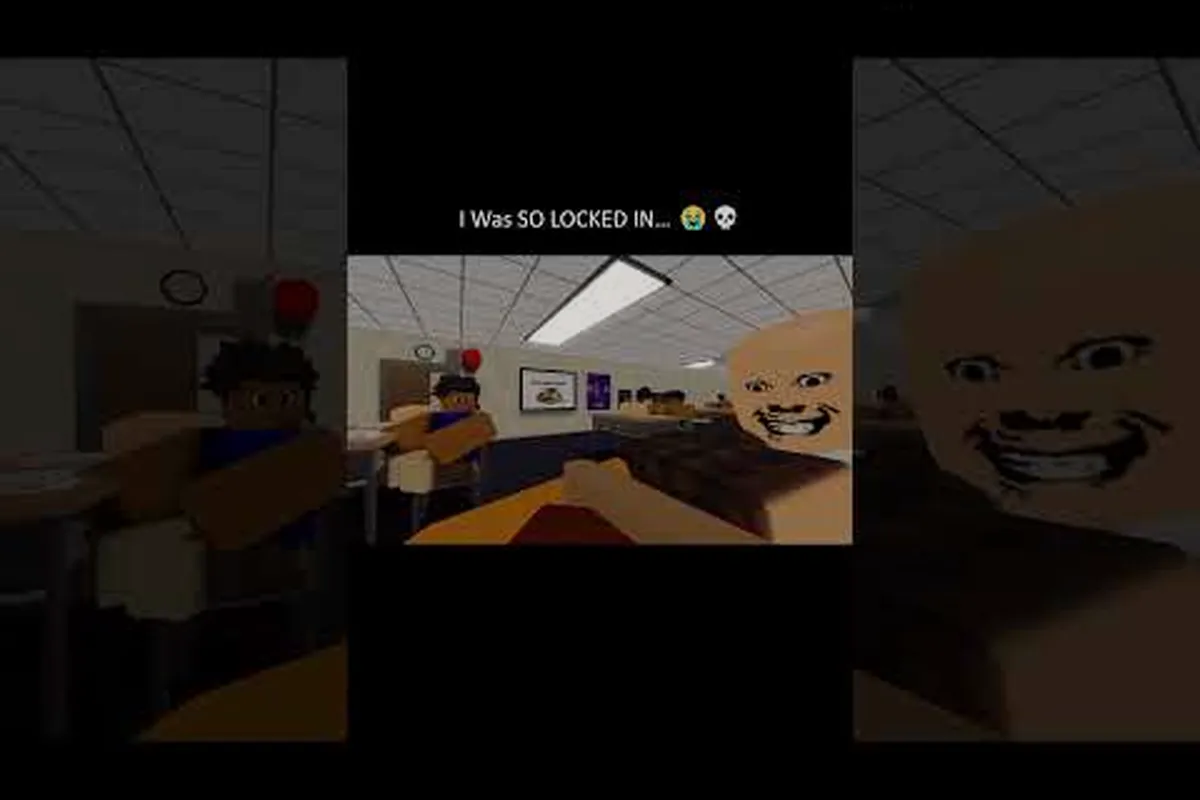
Coordinating a squad in Cheating During Testing changes the entire feel of the exam hall. Instead of one nervous student dodging the teacher's gaze, you have multiple sets of eyes tracking patterns, sharing answers, and covering each other's anxiety spikes. The trick is knowing which responsibilities to delegate, how the teacher AI reacts to a full classroom, and where the multiplayer credit bonuses actually come from. This guide covers the core mechanics behind cheating during testing team play so your group walks out with the highest grade on the board.
How Multiplayer Lobby Setup Works in Cheating During Testing
Every match begins in a classroom lobby that can host several players at once. According to the official Cheating During Testing Roblox page, the experience is currently tagged as BETA, and the developer (ebenxzy) continues to tune lobby sizes. Community testing suggests the typical squad runs somewhere between 2 and 6 students, which keeps the teacher AI alert without flooding the room with too many snitches.
Roles You Should Assign Before the Test Starts
Before anyone pulls out a phone, the squad should lock in at least two roles — typically a Lookout who watches the teacher AI's patrol pattern and a Distraction who triggers the next classroom visit on purpose. Without that clear division of labor, every player ends up reacting to the same teacher movement independently, and the multiplayer difficulty scaling kicks in almost immediately, since the game's co-op algorithm spawns extra desks, tighter sightlines, and faster detention timers whenever it detects uncoordinated movement. Assigning roles in the lobby phase is the single cheapest way to keep that difficulty curve from spiking before the first question is even read aloud.
-
Lookout — Watches the teacher's head and shoulders for any rotation signal. Calls out when the teacher is about to turn, usually with a quick in-game emote or chat ping.
-
Answer Runner — Pulls the correct answer from a phone or note and passes it to teammates who are still mid-question. Higher-risk role because they hold the visible cheat tool the longest.
-
Anxiety Support — Carries extra snacks and keeps nearby teammates' anxiety values low. Especially useful for newer players whose anxiety climbs faster under pressure.
-
Snitch Handler — Monitors other students in the room and physically blocks or distracts any AI-controlled snitch before they raise their hand.
Pre-Round Checklist for Cheating During Testing Group Strategies
A quick pre-round checklist saves more runs than any in-fight reaction. Most veteran groups on community Discord threads run through the same five steps before the teacher walks in: confirming each player is loaded into the correct lobby, verifying the host's Teacher AI hasn't shifted detection thresholds after the latest patch, role-locking positions so the teleporter-checker isn't also carrying answer slips, screenshotting the round's objective spawns, and assigning a single caller to relay cheating during testing multiplayer difficulty cues over voice. Skipping any one of those steps is almost always the cause of a mid-round wipe that no amount of reaction play can recover from.
-
Confirm everyone has at least one snack equipped for anxiety control
-
Choose seating positions that form a triangle of sight lines
-
Assign the lookout to the desk closest to the teacher's patrol path
-
Test the chat wheel or voice channel to make sure quick-call pings work
-
Agree on a panic word that means "phones down, teacher is staring at you"
Does the Teacher AI Change in Multiplayer Matches
One of the most common questions from new players is whether the teacher AI behaves differently in multiplayer. Based on community reports and repeated testing clips shared on YouTube, the answer is yes — the teacher gets noticeably more aggressive as the lobby fills up. This is a key piece of the cheating during testing multiplayer scaling puzzle.
How the Teacher AI Adjusts to Player Count
The teacher is not a static NPC. When you move from a solo match into a full classroom, the patrol speed, the head-turn frequency, and the fake-out window all scale upward. The teacher also appears to track more desks per sweep when there are more students visible.
| Player Count | Teacher Patrol Speed | Head-Turn Frequency | Fake-Out Window | Overall Threat |
|---|---|---|---|---|
| Solo (1 student) | Slow | Low | Long | Low |
| Small Squad (2–3) | Medium | Medium | Medium | Moderate |
| Mid Lobby (4–5) | Fast | High | Short | High |
| Full Classroom (6+) | Very Fast | Very High | Very Short | Extreme |
The "fake-out window" refers to the brief pause where the teacher pretends to look away but is actually checking for movement. In solo runs you often have enough time to put the phone away; in full-classroom runs that window is so short that only a dedicated lookout can reliably warn the squad.
What This Means for Cheating During Testing Multiplayer Difficulty
Because the teacher is more alert, the room is also more crowded with AI-controlled snitches. According to community data, the snitch spawn rate also scales with the lobby size, which is why a coordinated group almost always out-performs a group of randoms. The penalty for getting caught is harsh — a single teacher glance that lands on a visible phone resets your progress on that question, and a confirmed catch sends you back to your desk. Coordinating who cheats when is the difference between a perfect grade and failing the exam.
Cheating During Testing Multiplayer Scaling: Credit Bonuses and Risk
| Mechanic | Effect on Team Play | Solo vs Multiplayer Impact |
|---|---|---|
| Anxiety | Rises per player independently; high anxiety = instant fail | Solo failure = 1 player lost; team failure = entire group loses exam progress |
| Hunger | Each teammate must manage own snack consumption | Multiplayer forces split snack resource pool across N players |
| Snitch | Other students raise hand to teacher when spotting cheating | Team play increases # of snitch detection vectors; coordinated lookout required |
| Teacher turn-around | Teacher AI reacts to any visible phone in lobby | Multiplayer = N× phone visibility risk vs solo 1× risk |
| Credits earned | Earned per successful exam completion | Team bonus multiplier boosts credit income for higher-tier phone upgrades (e.g., better phones) |
Multiplayer is not just a social experience — it directly affects your rewards. The game rewards coordinated play with a credit multiplier that scales per active teammate who stays connected through the final question, making farming faster and unlocks easier. When every player in the lobby answers correctly on a shared round, the bonus stacks well beyond what solo runners can earn in the same timeframe, so a disciplined four-stack routinely clears answer streaks and hotspot objectives that would burn a lone player twice the time.
Why Playing With Friends Gives You More Credits
When you finish an exam successfully in a squad, the game applies a friends credit bonus on top of your base earnings. Community testing indicates the bonus grows with squad size, but only if your teammates actually clear the exam too. A squad where one player fails drags the bonus down for everyone.
| Squad Size | Base Credit Earned (Rough Avg.) | Friends Credit Bonus | Effective Earnings |
|---|---|---|---|
| Solo | 100 credits | +0% | 100 |
| Duo | 100 credits | +15% | 115 |
| Squad of 3 | 100 credits | +30% | 130 |
| Squad of 4 | 100 credits | +50% | 150 |
| Squad of 5+ | 100 credits | +60–75% | 160–175 |
These percentages are reported by players and may shift as the developer patches the economy. The credit-per-question increase stacks with the streak multiplier in group runs, so a full lobby maintaining a 10x streak on the Hard exam can realistically clear the 8,000-credit threshold in roughly half the solo time. They confirm that the multiplayer credit scaling is meaningful, which is one of the strongest reasons to learn team play.
Risks That Come With Multiplayer Bonus
More credits come with more risk. The biggest downside is that a single teammate who fails the exam by getting caught or by letting anxiety max out pulls the entire group down. There is also a higher chance that an AI snitch in a crowded room notices a squad passing notes. This is where cheating during testing trusting friends becomes a real decision point — betrayal mechanics are part of the late-game chaos, and not every lobby is honest.
Coordinating Answers and Lookouts Mid-Round
Once the exam starts, the actual coordination loop is short and intense. Each question gives the team roughly the same amount of time to answer, and the teacher rotates on a tight loop. The cheating during testing answer sharing role has to be efficient because every second a phone is on screen is a second the teacher can spot it.
Voice and Chat Strategies That Actually Work
The most consistent squads rely on a small set of pre-agreed callouts. According to community testing, free voice chat apps paired with Roblox in-game emotes give the lowest reaction time, but many younger players prefer to use the built-in chat wheel to keep things safe.
-
"Phone" — Out-of-sight teammate, safe to start cheating
-
"Up" — Teacher is looking up, momentary safe window
-
"Turn" — Teacher is rotating, phones down immediately
-
"Snitch left / right" — AI snitch approaching from that side
-
"Pass" — Answer runner is moving toward you with a note
For a deeper look at building these callouts, the cheating during testing communicating with team guide covers chat wheel customization in detail, including how to bind quick pings for "Rule breaker spotted," "Teacher AI is investigating," and "Split up and regroup" so your four-person squad can react within the 2–3 second window before the Teacher AI's suspicion meter crosses its escalation threshold. It also walks through voice-channel etiquette for group strategies, such as muting the accused player early to avoid false reports and using positional callouts tied to the principal's office, the east hallway, and the cafeteria to coordinate rule-breaking runs without triggering the multiplayer difficulty scaling penalties.
Sharing Answers Without Getting Caught
The actual passing of answers is a stealth mini-game in itself. The answer runner has to physically move the note to a teammate's desk, which means crossing the teacher's line of sight. Most groups adopt a passing pattern:
-
Runner waits until the lookout confirms the teacher is looking at the board
-
Runner walks diagonally behind a row of desks to break the sight line
-
Note is dropped on the destination desk; receiver picks it up on the next safe window
-
Runner immediately returns to their own seat to avoid lingering in the open
This pattern keeps each individual cheat action under 3–4 seconds, which is below the teacher's reaction window in most lobbies. If your group wants a more comprehensive overview of the core multiplayer loop, the cheating during testing multiplayer guide breaks down each phase in order.
Fun Things to Do With Friends in Cheating During Testing
Beyond the exam itself, Cheating During Testing multiplayer offers a surprising amount of room for chaos. The teacher AI and snitch system are rigid enough to challenge a coordinated group, but loose enough that creative squads can invent their own mini-games.
Challenge Runs and Self-Imposed Rules
Most replay value in team play comes from house rules the group adds on top of the base game, since the vanilla engine rarely escalates difficulty past three active players. Popular community formats reported by testers include: a "tag-team" mode where only the cheater who got caught can be voted out, a "hidden cheat" variant that hides whether an active cheat is single-use or persistent, and a "class loadout swap" rule that rerolls the cheater's available cheats on each full round, forcing mid-game strategy re-evaluation.
-
Silent round — No chat, no emotes, only agreed physical signals. The first team to clear the exam with a perfect score wins.
-
Lookout only round — One player must do the entire test without any phone; the rest of the squad has to feed them every answer using only notes.
-
Speedrun classroom — Set a target finish time (for example, under 3 minutes). Any caught teammate restarts the whole lobby timer.
-
Snitch hunter mode — Ignore the exam briefly and try to physically block every snitch in the room before answering a single question.
-
No-snack challenge — Anxiety control off the table; the team has to win without any food items. Anxiety-heavy difficulty for veteran groups.
Why Multiplayer Feels Different From Solo Play
The single-player experience is a tight stealth puzzle where you personally manage anxiety, hunger, and the teacher's gaze. The multiplayer version turns the same mechanics into a real-time coordination problem with information asymmetry. One player might be holding a phone while another is acting as a decoy, and the dynamic shifts every time the teacher rotates.
This is also why the fun things to do with friends tend to lean into social deception. Some lobbies experiment with hidden betrayals, where one teammate secretly fails the exam on purpose to see how the rest of the squad adapts. Others run pure cooperative speedruns. Both extremes work because the game engine gives players enough freedom to choose their playstyle.
Advanced Team Play Tactics for Veteran Squads
Once your group has the basics down, a few advanced tactics can push your grade from "passing" to "perfect." These rely on understanding the teacher's pathing, the snitch AI priorities, and the way credit bonuses compound over a session.
Map Control and Sight Line Management
The classroom is a small map, but the desks and the teacher's patrol route create natural choke points. Veteran squads assign each player to a specific desk that maximizes their sight line to the teacher while staying out of the teacher's primary cone of vision.
-
Front row, left — Best for the lookout because the teacher is closest
-
Back row, center — Safest spot for the answer runner because the teacher almost never patrols behind the last row
-
Middle row, right — Ideal for the anxiety support, since this spot is equidistant from all teammates for quick snack delivery
-
Front row, right — High risk, high reward; the snitch handler sits here to intercept AI students as they enter the room
Reading the Teacher's Fake-Out Animation
A common complaint from new players is that the teacher "cheats" by faking a look-away. Veteran groups counter this by reading the shoulder rotation rather than the head. If the teacher's shoulders twitch but the head does not fully turn, the fake-out is active. Calling this out in advance gives the squad a 1–2 second edge, which is usually enough to keep phones out of sight.
For a full breakdown of how the teacher moves between patrol phases, the cheating during testing hiding from teacher guide covers the pathing in detail, including the exact 8-second loop the AI runs between desk clusters and how players in 2-4 player multiplayer can stagger their position reads to triangulate her rotation. Understanding that loop matters even more in team play because the teacher AI's patrol timer stretches by roughly 1.3x in multiplayer, so raw memorization from solo runs will desync if you don't account for the extra delay between waypoint checks.
Reinvestment Strategy With Multiplayer Credits
Because the multiplayer credit bonus is so strong, veteran groups reinvest heavily into phones and snacks during their first few lobbies. The goal is to build up enough permanent gear that future runs become much easier. According to community reports, the fastest credit farming comes from:
-
Farming 3–4 quick rounds in a row with a consistent squad
-
Saving credits toward a higher-tier phone that has a faster answer pull
-
Buying bulk snacks at the start of each session to keep anxiety low for the whole team
A full breakdown of this economy is in the cheating during testing credit boosting guide, which compares solo vs multiplayer earnings in more detail. That reference page is especially useful if you're trying to decide whether a duo queue with a trusted friend is worth the coordination overhead, since the per-round credit delta between solo and two-player lobbies shifts once you factor in shared objective bonuses, reduced detection pressure on individual keystrokes, and how the teacher AI rebalances question difficulty when it detects multiple answer inputs. The scaling math also depends heavily on whether your group is running a full four-stack with voice comms or just pairing up, because multiplayer difficulty curves compress at higher party sizes and change the risk-to-reward ratio for the cheating-during-testing playstyle your team has settled into.
Frequently Asked Questions
Does the teacher AI change in multiplayer in Cheating During Testing?
Yes. Community testing shows the teacher's patrol speed, head-turn frequency, and fake-out window all scale upward as the lobby fills up, and snitch spawn rates also rise with player count. A full classroom is significantly harder than a solo run, which is why coordination is so important.
What is the best team size for cheating during testing group strategies?
Most groups report that a squad of 3 to 4 players hits the sweet spot. You get a meaningful friends credit bonus, enough bodies to cover lookout and answer-running roles, and the teacher AI is still readable. Going above 5 players makes the room very crowded and the fake-out window much shorter.
How does cheating during testing multiplayer scaling affect credit earnings?
The friends credit bonus stacks with squad size, so a team of 4 can earn roughly 50% more credits than a solo player for the same exam. However, the bonus only applies if every teammate clears the exam, so one failing player drags the whole squad's reward down. This is the central risk-reward tradeoff of multiplayer scaling.
What are the most fun things to do with friends in Cheating During Testing?
Beyond the standard exam mode, squads enjoy challenge runs like silent rounds, lookout-only runs, snitch hunter mode, and speedrun classrooms. Some groups also run betrayal formats where one teammate secretly fails the exam to test the squad's adaptability, which adds a social layer on top of the stealth mechanics.
Can I play Cheating During Testing team play with random players?
Yes, the game lets you join public lobbies, but the coordination is much harder. Random players rarely have pre-agreed callouts, and there is no guarantee they will follow the lookout's warnings. Most veteran players recommend building a small friends list of 2–4 reliable teammates before pushing for high credit runs.
Grab two classmates, lock in your roles (e.g., one desk watcher, one answer-signer, one distractor), and run a few practice rounds to test the teacher AI's behavior — does the NPC teacher react the same in co-op, or does the difficulty scaling tighten once the game registers multiple suspicion sources feeding line-of-sight?