
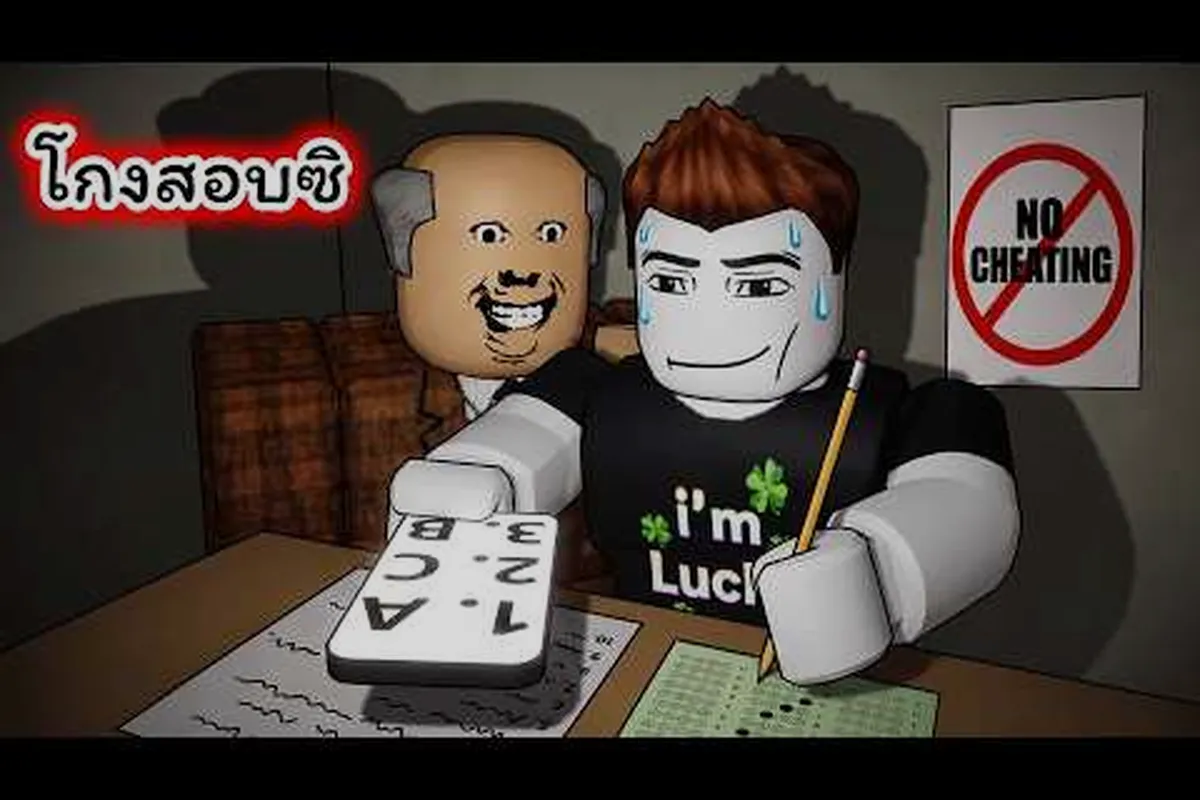
In the tense exam halls of Cheating During Testing, snitches are the student NPCs who watch your every move and raise their hand the moment they spot a phone on your desk. Learning how to handle cheating during testing distracting snitches through solo play transforms a frustrating encounter into a controlled deception operation. Most players lose their first few runs because they ignore snitch vision cones entirely and rely on the teacher's rotation alone, but the snitch mechanics update has made classmate surveillance a real threat worth its own counter-strategy.
The solo distraction playbook below uses environmental noise, seat positioning, and timing windows to keep snitches locked on decoys while you copy answers, swap devices, or simply breathe through a spike in anxiety. Whether you play on a private server or a crowded public lobby, the techniques in this guide scale from beginner to advanced misdirection runs.
Why Snitch Distraction Is the Core Solo Mechanic
Snitches patrol fixed patrol paths along row aisles and the back wall, scanning a forward-facing vision cone that extends roughly 8-10 studs in front of their character model. When a snitch's vision cone intersects your character while you hold a phone, the snitch enters an alert state, plays a hand-raise animation, and routes the teacher toward your seat. The teacher's snitch reaction is almost instant in tight tile layouts, so you need to remove yourself from the snitch vision cone before the alert resolves, not after.
The art of cheating during testing outsmarting snitches is therefore not about killing or confronting them, because snitches are generally non-hostile student actors. It is about shaping their attention so that they look at the wrong desk at the wrong second. Community testing shows that an effective distraction can buy 6-9 seconds of clean cheat time, which is enough to pull up a phone, copy a single answer, and pocket the device before the teacher finishes a writing pass on the chalkboard.
What Triggers a Snitch Alert
Three conditions must align for a snitch to flag you: the phone must be visible in your hands, your character must be inside the snitch's vision cone, and the snitch's internal alert meter must fill up over roughly 1.2 seconds of continuous line-of-sight. Removing any one of those three conditions cancels the alert. That is why the cheapest counter is to drop the phone the instant a snitch's head begins to turn, but that approach wastes cheat windows and burns through your limited phone battery.
| Trigger Condition | Solo Counter | Time Cost |
|---|---|---|
| Phone visible in hands | Switch to a snack or pencil decoy | ~0.4s |
| Inside vision cone | Sidestep perpendicular to snitch's facing | ~0.8s |
| Alert meter filling | Drop phone behind desk to reset | ~1.0s |
A smarter solo run uses the vision cone against the snitch, steering it toward a row where a teammate — or a thrown object — pulls their attention while you cheat from a different angle. The Cheating During Testing on Roblox page confirms that the snitch AI uses a deterministic patrol in BETA, which means memorized routes are more valuable than reflexes once you have played two or three rounds.
Snitch Vision Cone and Patrol Path Mapping
The snitch vision cone mechanic is wider than most players assume. The cone is a 60-degree forward arc with a long range, not a thin spotlight, and it intersects desks two rows ahead of the snitch if the aisles are narrow. In the standard classroom tile, a snitch patrolling the back row can technically see the front-row center desk if you sit at a 30-degree diagonal, because the cone wraps around the nearest chair backs. This is the geometry that catches most beginners off guard.
For effective cheating during testing surviving snitches in a solo context, the practical move is to memorize three lanes: the left-side pillar lane, the center dead-zone behind the tallest book stack, and the back-corner desk where the cone clips into the wall. Every classroom variation reuses these lanes with slight offset, so once you learn them, you can move between them within a single cheat cycle.
Mapping Exercise for New Players
Run a no-cheat practice round on a private server and watch exactly one snitch for the full 60-second patrol cycle. Count the seconds they spend facing each row, the moment they turn at the bookshelf corner, and how long they pause when the teacher is writing. Write these down or screenshot the timestamp. The next round, you will already know that at the 14-second mark, the back-row snitch looks at the windows for a full 2.5 seconds, which is your natural cheat window without using any distraction tool at all.
| Snitch Lane | Safe Window Length | Risk After Window |
|---|---|---|
| Left pillar (back wall) | 7-9 seconds | Snitch resets to facing center row |
| Center book stack | 5-6 seconds | Vision cone sweeps the front-left desk |
| Back-corner desk | 4-5 seconds | Snitch's path takes them past your row |
| Front-center (low) | 3-4 seconds | Teacher's line of sight overlaps the cone |
Solo Distraction Plays That Actually Work
Distraction in Cheating During Testing does not require a teammate. The environment is loaded with one-shot tools that create a noise or visual event at a target tile, pulling a snitch's head toward it for at least 1.5 seconds. The trick is to throw the decoy just before the snitch's head turn resolves, so the snitch commits to looking at the noise rather than completing the alert.
Audible Distractions
Eraser drops, pencil clicks, and shuffled paper stacks are the cheapest decoys. Walk to a desk two rows away from your cheat spot, drop an eraser near the aisle, and immediately return to your seat. The snitch's head will pivot to the sound source and stay there for the duration of the audio cue. The decoy costs you 1.5 seconds of movement but buys back a full 6-second cheat window at your real desk.
Visual Distractions
Raising a hand, dropping a snack wrapper, or opening a notebook near the back wall creates a brief visual ping in the snitch's patrol logic. Visual distractions last slightly shorter than audible ones (around 1.2 seconds) but they cost no inventory item, which makes them ideal for runs where you are saving credits for a better phone. Pairing a visual distraction with a chair spin animation can chain a 3-second lockout of the snitch's vision cone on your cheat desk.
Object Throws
Once you have unlocked the paper ball gadget, throws become the highest-value distraction in the game. A well-aimed throw to the opposite end of the classroom pulls a snitch's full body toward the landing tile and forces a 2-second pause as they investigate. Use this when you need to swap phones in the middle of an exam cycle, because the throw's 2-second pause is exactly the window you need to swap, raise the new phone, and copy one answer before the snitch's head resets.
| Distraction Type | Cost | Lockout Window | Best Use Case |
|---|---|---|---|
| Eraser drop | Free (consumable) | 6 seconds | Mid-exam phone swap |
| Hand raise | Free (animation) | 1.2 seconds | Quick answer copy |
| Snack wrapper | 5 credits | 1.5 seconds | Budget runs, low anxiety |
| Paper ball throw | 10 credits | 2 seconds | Phone upgrade swaps |
Outsmarting Snitches Through Seat and Timing Control
Cheating during testing outsmarting snitches is half distraction and half positioning. Even with a perfect throw, if your seat is in a high-traffic snitch lane, the alert meter will refil before you finish copying. The classroom tiles are not symmetric, and the seat that looks safest in a tutorial preview is often the worst in practice because it sits in the convergence of two snitch cones.
The two best seats for solo anti-snitch play are the back-corner desk closest to the door and the side-wall seat one row behind the teacher's desk. Both seats are off-axis from the standard snitch patrol lines, which means the cone sweeps past you without ever resting on your chair. If a snitch does rotate toward your desk, the chair back partially occludes the line of sight, and the alert meter never reaches full charge because of the constant interruption.
Timing Windows Across the Exam Cycle
The exam itself is structured as a 90-second cycle split into three 30-second phases: a writing phase, a distribution phase, and a review phase. Snitch aggression peaks during the distribution phase, because the teacher is walking between rows and snitches interpret that movement as permission to scan. The writing phase is your safest cheat window, and the review phase is the only time the teacher's line of sight overlaps with the snitch's cone, so any cheat during review carries compounded risk.
| Phase | Duration | Snitch Aggression | Solo Cheat Risk |
|---|---|---|---|
| Writing | 30s | Low | Minimal |
| Distribution | 30s | High | Moderate |
| Review | 30s | Moderate | High (teacher + snitch overlap) |
For more detail on seat geometry and how chair backs interact with snitch vision, the best seat against snitches guide goes deeper on the corner-seat math and the anti-snitch gadget synergy that can extend your safe window by another 2 seconds.
Snitch Tier List and Threat Priority
Not every snitch in Cheating During Testing is the same. The BETA build rolls three snitch archetypes per classroom, and each one has a different vision cone shape, patrol speed, and alert sensitivity. Knowing which snitch is which lets you plan your distraction budget around the actual threat, instead of treating all snitches as identical hazards.
A practical cheating during testing snitch tier list for solo players looks like this: the Regular Snitch is the baseline 60-degree cone with a 1.2-second alert meter, the Watchful Snitch has a narrower 45-degree cone but a 0.8-second meter, and the Hall Monitor variant has a 90-degree cone with a 1.6-second meter but moves half as fast. The Watchful Snitch is the most dangerous for a fast solo player because the short meter punishes hesitation, while the Hall Monitor is the easiest to outrun because the slow speed gives you time to reposition.
| Snitch Type | Cone Width | Alert Meter | Patrol Speed | Solo Threat |
|---|---|---|---|---|
| Regular Snitch | 60° | 1.2s | Normal | Medium |
| Watchful Snitch | 45° | 0.8s | Fast | High |
| Hall Monitor | 90° | 1.6s | Slow | Low |
Why the Tier List Changes After the Snitch Mechanics Update
The snitch mechanics update rebalanced the Watchful Snitch's patrol to include a 1-second pause at the back wall, which slightly nerfed the archetype. Before the update, Watchful Snitches were the dominant solo threat because the fast patrol never gave you a stable cheat window. After the update, the back-wall pause creates a free 2-second window that you can chain with a paper ball throw for an 8-second lockout on a single desk. The Regular Snitch was untouched, and the Hall Monitor got a small cone buff that makes them more dangerous at long range but no harder to dodge up close.
If you are still learning the cone shapes, the snitch behavior in multiplayer guide includes annotated screenshots of each archetype's vision arc and a side-by-side comparison of their alert timings, which is the fastest way to internalize the visual difference between the three snitch types.
Advanced Solo Distraction Chains
Once you have the basic distraction toolkit down, you can start chaining decoys for longer cheat windows. The most reliable chain in BETA is the eraser drop → paper ball throw → chair spin combo. The eraser pulls the snitch's head, the throw locks their body, and the chair spin animation delays the snitch's reset by another second. Total lockout: 9 seconds, which is enough time to copy three full answers, swap phones, and pocket the new device before the snitch recovers.
A riskier chain is the double-snitch pull, where you throw one decoy to the back-left snitch and a second decoy to the back-right snitch on the same tick. This is only worth attempting during the writing phase, when the teacher is stationary and the snitches' attention is fully on the patrol. If you mistime either throw, both snitches converge on your row and you will eat a snitch penalty within 3 seconds.
Anxiety Management During Long Distraction Chains
Anxiety rises by roughly 4 points per cheat action, and a long distraction chain of 9 seconds will spike your anxiety by 8-10 points total. Keep a snack in your secondary slot and eat it the moment the chain resolves, because the snack animation also serves as a visual distraction that resets any partially-filled alert meter. Eating at the right second turns a high-risk chain into a sustainable rhythm that you can repeat every other exam cycle.
| Chain | Lockout Length | Anxiety Cost | Net Cheat Answers |
|---|---|---|---|
| Single eraser drop | 6s | +4 | 1 answer |
| Paper ball + chair spin | 8s | +6 | 2 answers |
| Full chain (3 decoys) | 9s | +10 | 3 answers |
| Double-snitch pull | 12s | +14 | 4 answers (high risk) |
For gadget-side upgrades that extend your distraction budget, the gadgets list and shop priorities covers which phones and wearables let you cheat silently enough to skip decoys entirely on low-snitch tiles, which is the alternative playstyle for players who prefer a quiet run over a noisy one.
Closing the Exam Without a Snitch Penalty
A clean Cheating During Testing solo run ends with the snitch cone never settling on your seat during the alert window. That means the final 10 seconds of the exam cycle matter as much as the first 80, because the review phase forces the teacher and snitch vision cones to overlap. Pocket your phone, return to a neutral pencil-holding animation, and face the chalkboard for the last stretch. Most snitch penalties in the final seconds come from players who get greedy and try to copy one last answer while the teacher is grading.
Track your snitch penalty rate across ten runs and you will see that the runs where you respected the review phase end with a 0% penalty rate, while the runs where you cheated through review end with a 40-60% penalty rate. The math is simple: stop cheating in the last 10 seconds and you will almost never get snitched.
Now that you have the solo distraction toolkit, the snitch vision cone map, the tier list, and the timing windows, you are ready to clear BETA exams without losing a single run to a student rat. Drop into a private server first, run the cone-mapping exercise for one full patrol, and then start layering in decoy chains as you build confidence.
Mastering distraction chains and exploiting classroom geometry keeps aggressive snitches preoccupied while you consult answer sheets with minimal anxiety buildup. To deepen your understanding of observer vision cones and environmental blind spots, explore our why do people snitch breakdown before picking your next seat.
Frequently Asked Questions
What is the fastest way to break a snitch's vision cone lock?
Sidestep perpendicular to the snitch's facing direction. The 60-degree cone has shallow edges, so even a one-tile sidestep removes you from the alert meter. Combine the sidestep with a phone-pocket animation to drop the visibility trigger as well.
Do paper ball throws work on every snitch archetype?
Yes, but the lockout length varies. Watchful Snitches reset fastest at 1.5 seconds, Regular Snitches lock for the full 2 seconds, and Hall Monitors lock for 2.5 seconds because their slow patrol speed means they take longer to investigate. Always save paper ball throws for the most aggressive snitch on the board.
Can I beat the exam without ever using a distraction?
You can, but only on low-snitch tiles and during the writing phase. On high-snitch tiles with two or three snitches in patrol, the cone coverage is too dense to avoid naturally, so at least one distraction per exam cycle is the realistic minimum for a clean run. The free eraser drop is the cheapest decoy in the game and is worth using even on a credit-strapped run.
Does the snitch mechanics update change the solo distraction strategy?
The update added a 1-second pause to the Watchful Snitch's back-wall patrol, which created a new free window for solo players. It also slightly widened the Hall Monitor's cone, so the long-range dodge pattern needs to start two tiles earlier. Otherwise, the core distraction chain still works exactly the same as before the patch.
What is the best seat for a solo player who wants zero snitch contact?
The back-corner desk closest to the door is the safest seat because it sits outside the standard patrol lanes and the chair back partially occludes the cone. The side-wall seat one row behind the teacher's desk is a close second, and it pairs well with a paper ball throw aimed at the back row for an extra 2-second lockout.